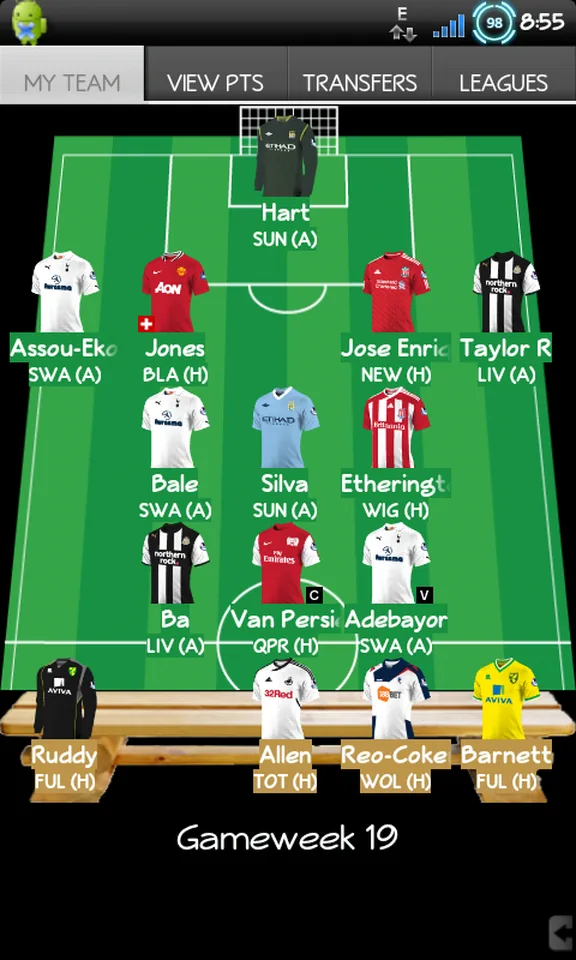
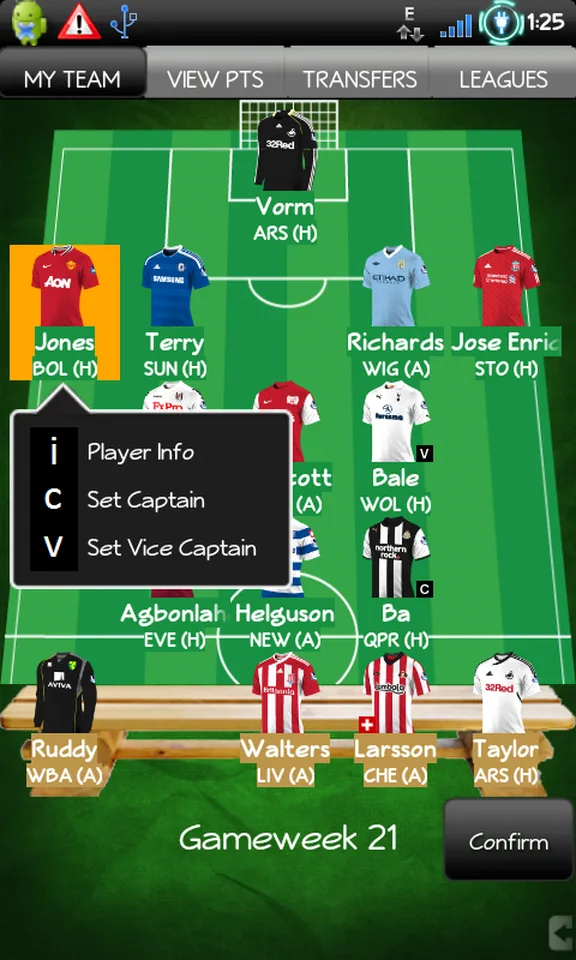
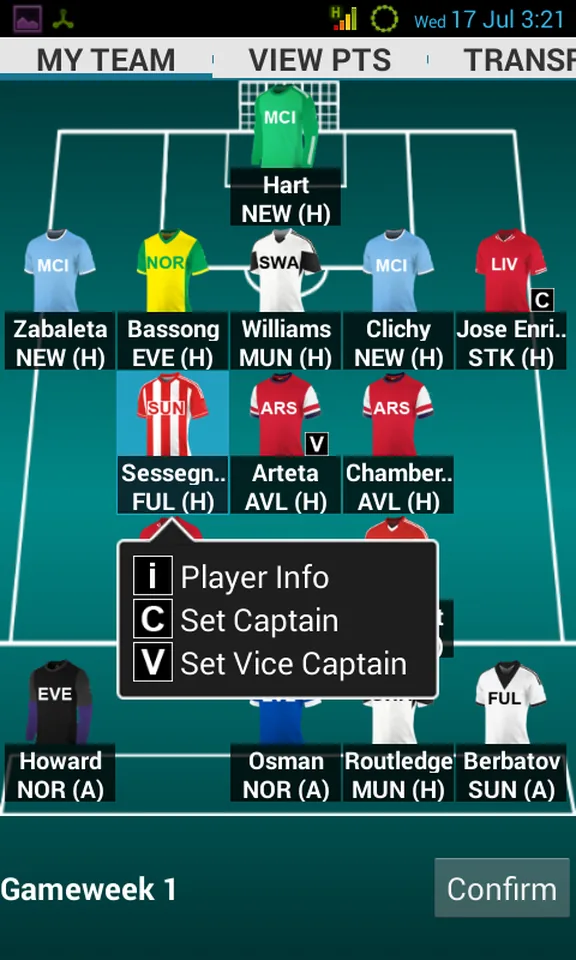
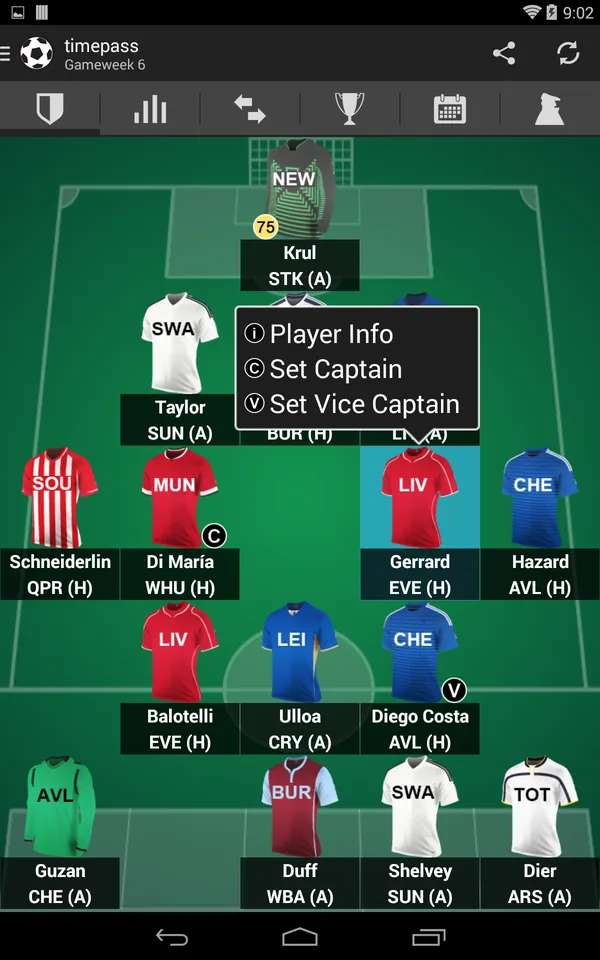
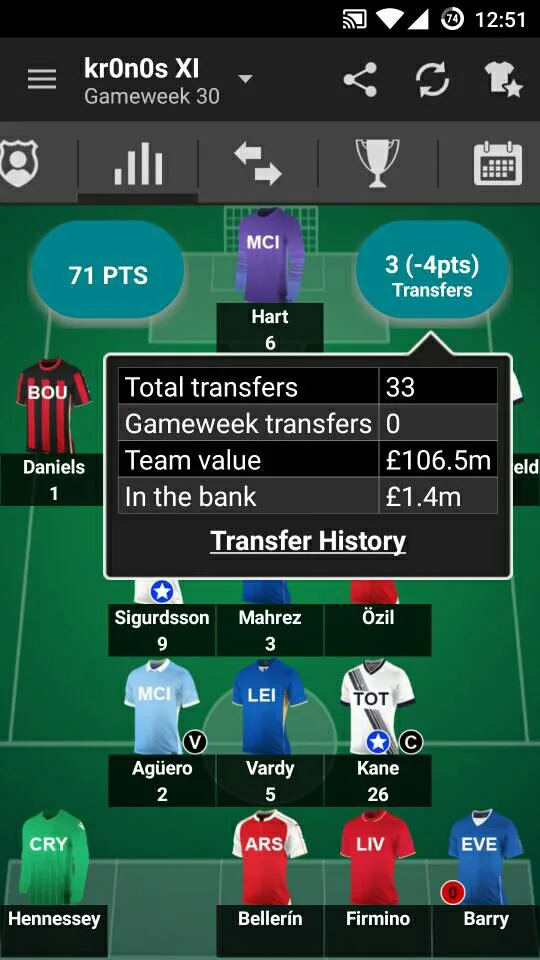
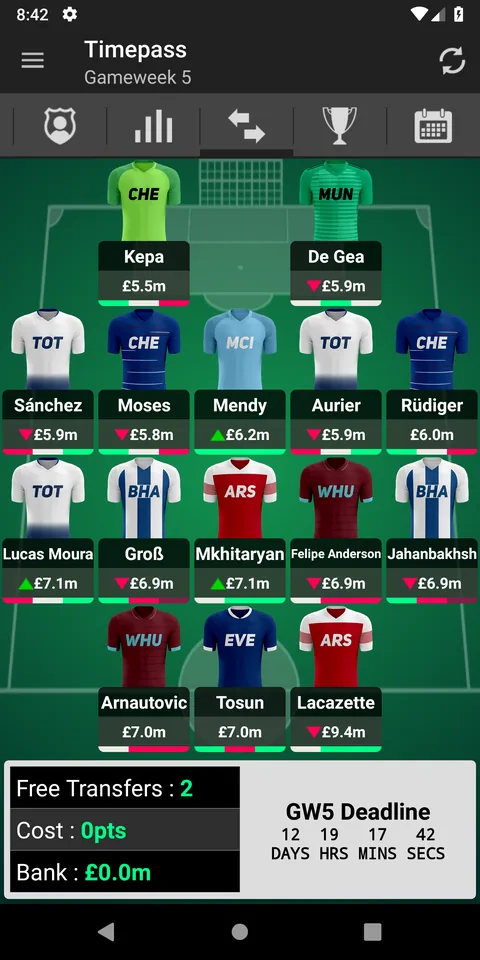
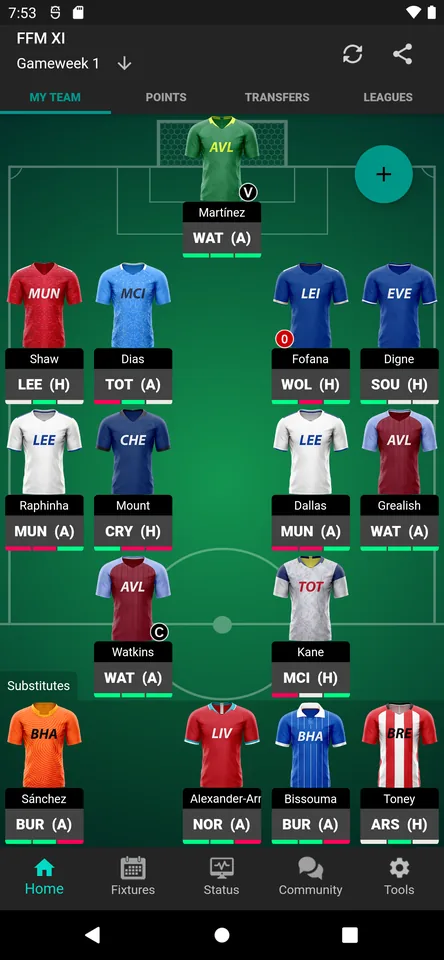
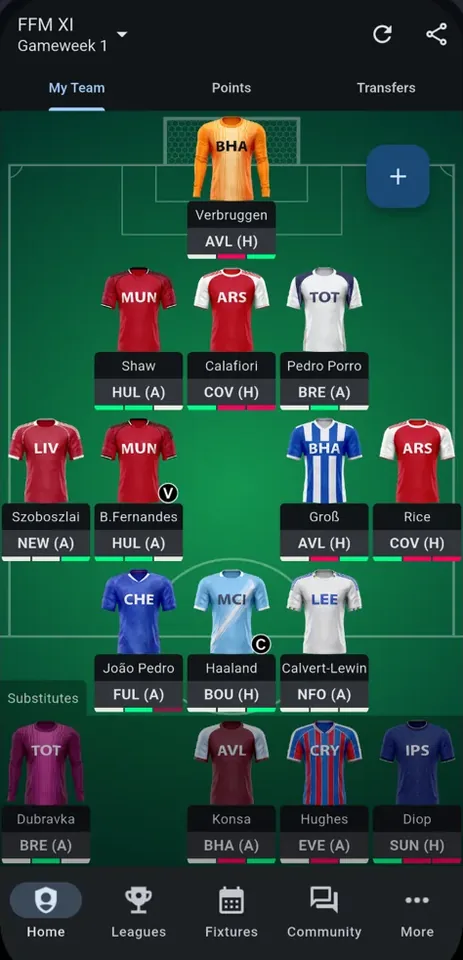
On 15th November 2011, I published my first Android app, Fantasy Football Manager. At the time, I had absolutely no idea what I was getting myself into. I certainly didn't imagine that, 15 years later, I'd still be working on the same app, that it would have over 6 million installs, or that it would become my full-time business.
But let's go back to the beginning.
- 2011First release on Google Play
- 2014Co-founded Mapp Digital
- 2016Started Digifury
- 2018Back to FFM full-time
- 2021Launched on iOS
- TodaySeason 16, still a one-person show
It all started with a simple problem
Back in 2011, I was studying Computer Engineering. Our curriculum taught us C and C++, but Java wasn't part of it. I found that a little frustrating, because I wanted to learn Java, especially with Android phones becoming increasingly popular.
At the same time, a few friends and I were playing Fantasy Premier League (FPL). The game only had a website, and using it on our new Android phones wasn't particularly convenient. There was no official app to make things easier.
So I thought, why not build one?
The idea was simple: create an Android app that would let me and my friends manage our Fantasy Premier League teams more conveniently. It would also give me a chance to learn Java and Android development. Perhaps it could even look good on my CV, or become something I could eventually sell.
I had absolutely no experience with Android development. I was figuring out almost everything from scratch, with Google and Stack Overflow as my best friends. It took me around five months to build the first version. I did almost everything myself, with a little help from a friend on some of the logic.
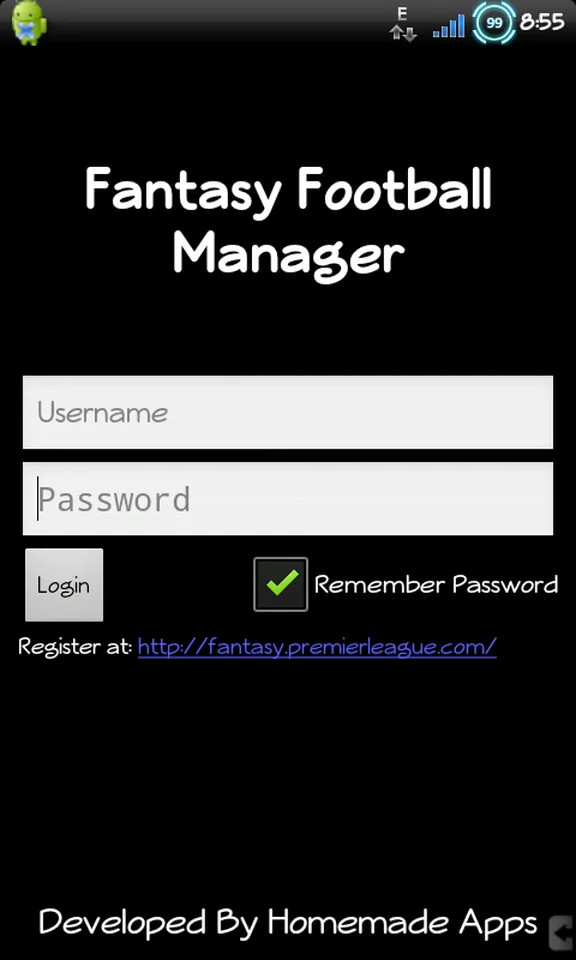
Finally, on 15th November 2011, I published Fantasy Football Manager on the Google Play Store.
I was expecting a handful of friends to use it. Instead, downloads started coming in by the thousands, from users across the world.
That was my first real introduction to the internet's ability to take something you've built in your bedroom and put it in the hands of people you've never met.
From a hobby to a source of income
The app was free initially. As the user base grew, I started receiving emails from users reporting bugs, suggesting improvements and requesting new features.
I was quite obsessive about fixing things quickly. If someone reported a bug, I'd try to resolve it as soon as possible. If users wanted a feature, I'd look into adding it. That responsiveness became an important part of the relationship I built with my users, and it's something I still value today.
After about a year, I introduced advertisements to the app to generate some revenue. To my surprise, it started earning quite well.
I eventually completed my engineering degree and joined a game development company. But something interesting was happening in the background: my little app was earning around twice my salary.
I stayed in that job for about a year. But I already knew that a conventional 9-to-5 career, the kind my father had spent his life in, wasn't what I wanted, and part of me wanted to prove to him that there was another way.
He wasn't particularly convinced. He believed a stable job was important, and that my app-based income could disappear any time if Google decided to take the app down. His concerns weren't unreasonable.
But I wanted to try something different.
After a year, I left my job and started freelancing.
Interestingly, even in the third or fourth year of the app, I was actively exploring opportunities to sell it. I thought I could get four or five times what it was earning annually, exit, and move on to something new. I wasn't particularly attached to the idea of running it forever.
Clearly, things didn't quite go according to that plan!
The startup detour: Mapp Digital and Digifury
One of my freelance projects was creating a mobile game for the Bollywood movie PK, starring Aamir Khan and Anushka Sharma. The idea was to create an endless-runner game in the style of Subway Surfers, built around the movie.
We managed to complete the entire project in under two weeks, which was quite an achievement for a game of that scale at the time.
It was during this project that I met Pratik, who would go on to become my business partner.
In 2014, we joined forces under the name Mapp Digital. Pratik had previously started a social platform for students and teachers, which he had since abandoned. Rather than spend money setting up an entirely new company, we decided to use the existing company and bring me on as a co-founder.
Mapp Digital was a bootstrapped operation. Pratik would bring in clients looking to build apps and games for their products, brands and promotions. I would work on these projects with a small team, often made up of college interns.
We were doing reasonably well.
In 2016, an investor approached us with an opportunity to start a new company under a new brand. That became Digifury.
Things suddenly looked quite different. We had investment, a large office, a team that eventually grew to around 10 people, and some exciting projects.
One of the most memorable was for Aprilia, for the launch of one of their bikes. It was a nationwide activation where people could get on an actual bike mounted on a truck, put on a VR headset and play our game using the bike's real accelerator and brakes as controls.
It was a fantastic project and a great experience.
However, running a funded company came with its own realities. We had a fancy office, expensive resources and considerably higher expenses. Although revenue had grown compared to our bootstrapped days at Mapp Digital, it wasn't growing enough to justify the costs.
Meanwhile, something rather ironic was happening.
Through all these years, Fantasy Football Manager was still sitting in the background, something I kept developing in my spare time. And it was consistently outperforming the businesses I was spending most of my working hours building.
In 2018, I decided it was time to call it quits before the business started accumulating losses. Pratik and I exited Digifury.
The decision was a little emotional for me, though probably more so for the people around us. I had always known where my real interest lay.
It was time to focus on Fantasy Football Manager full-time.
Back to what started it all
Coming back to the app full-time was probably one of the best professional decisions I've made.
Over the years, Fantasy Football Manager has evolved enormously. What started as a fairly simple app for managing a Fantasy Premier League team has grown into a much more comprehensive product, through thousands of changes, improvements, new features, bug fixes and redesigns along the way.
One of the biggest milestones came in September 2021, just after the start of the 2021/22 season, when Fantasy Football Manager finally launched on iOS, almost ten years after the first Android release.